

We have all been there, landing on a website that looks great, but doesn’t quite feel right. The layout is clean, the images are crisp, but it lacks relevance. It feels like it is built for someone else.
Surprisingly, this sense of detachment is all too common. Typically it is the result of something beyond visuals or copy. The real issue is there is a disconnect between what they want and what they actually get when they arrive. With users now surrounded by smart, intuitive digital experiences, the bar’s been raised. The days of a website that treats every visitor the same aren’t enough anymore.
Today’s consumer wants more. McKinsey reports that 71 percent of people now expect companies to deliver personalized experiences. But what’s even more telling, is that 74 percent said that they feel frustrated when the content on a website does not speak directly to them. It’s not just emotional frustration. This results in disengagement, missed opportunities and lost business.
This one-size-fits-all approach just doesn’t work anymore. It’s outdated. It’s like getting a random catalog in the mail — maybe it’s beautifully designed, but if it doesn’t relate to any of the person’s interests, then it winds up in the trash. Today’s users demand digital experiences that understand who they are, what they want and how they act. This is where personalization doesn’t just become valuable — it becomes essential. Personalizing when it’s done right is where we can fill that gap between the static web experience and a real user journey. SaaS brands are able to connect with visitors in real time, to deliver content, features and calls to action that actually matter to a particular visitor.
In this blog, we will explore how personalization is becoming a crucial USP for SaaS companies. We’ll discuss how expectations have changed, why first impressions define the entire customer journey and what continuous personalization can do to help you gain trust and convert.
1. Shifting Consumer Expectations
Building on the thought that today’s visitors expect more than a good looking website, it becomes quite apparent that personalization is no longer a nice to have. It’s what powers modern digital experiences. As discussed earlier, the frustration people feel when websites appear not to get them is a symptom of a much larger evolution in how customers deal with brands online. Years of interacting with smart platforms have made this shift. Users have grown accustomed to being known by everything from streaming services recommending the right show to online stores recalling browsing habits. Because of these experiences, anything less now always feels underwhelming.
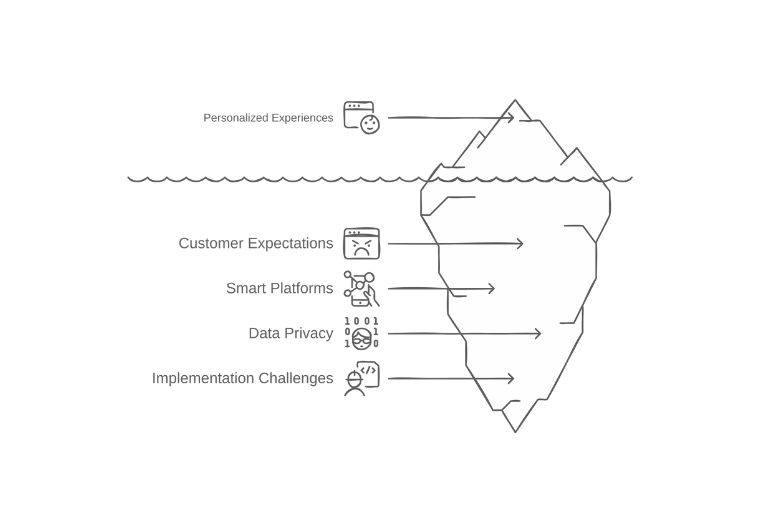
The need to feel seen and valued starts from the very first click. At that point, if a website fails to connect, the cost can be high. Visitors leave. Interest drops. Opportunities vanish. This is not just in theory: 81% of customers say they prefer to buy from companies that offer a personalized experience. And 52% say they feel more fulfilled when digital interactions feel tailored to them. It’s easy to see the contrast between a generic site and a personalized site. A generic one just sends the same message to everybody, without any sense of relevance. However, a personalized one will respond. It adapts to who is visiting and why they are visiting. It makes you feel understood. And also builds trust, which is the foundation for lasting digital relationships.
Read: 5 Steps to Perform Salesforce Integration Health Checks
2. Tailoring the Onboarding and Initial Engagement
With an understanding that today’s users expect to be seen and valued when they land on a website for the first time, the next logical step is to look into how that experience unfolds in real time. The first impression is what begins it all. Surprisingly, these first moments weigh heavily. It determines whether a visitor will stay, engage and explore or quietly leave never to return.
This is where personal onboarding moves beyond being a useful feature. It becomes a retention strategy. A welcome experience that mirrors a user’s needs, preferences and familiarity conveys that their time does matter. It makes them feel they are not just another visitor. They are understood.
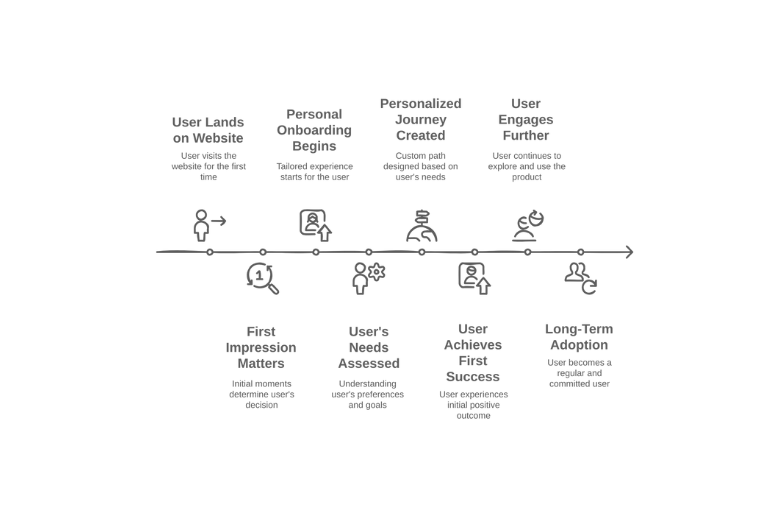
Imagine how things turn out when onboarding set up works for each person differently. Instead of the same static steps offered to everyone, the journey changes according to the user and the result they want to achieve. Are they first time users of the product or do they know something about how it works? Are they trying to look at visualizations or solve a very particular problem? A personalized approach guides them along the most relevant path. This clarification actually lessens drop-off rates and speeds up the time it takes for users to realize any value. In fact, one of the most reliable signs that personalization is working is a shorter time to value. When users make that first success moment sooner rather than later, they are likely to be positive and further engage themselves toward long-term adoption.
There is evidence that confirms this. Hotjar, a product experience insights tool, once updated their onboarding flow by a simple question: “Have you used Hotjar before?” and on the basis of response adjusted the onboarding checklist to the user’s comfort level. This one change led to a 26 percent increase in installations. A small act of listening could make a huge difference. It’s not just about onboarding here; it’s about making those initial contacts feel instinctive and nurturing. Contextual, thoughtful guidance is not just getting users started, but also keeping them going.
3. Driving Ongoing Engagement and Feature Adoption
After an individual approach to welcome and an onboarding experience guided by the individual’s goals, the journey does not end. The first impression is known as the foundation. Indeed, the real opportunity lies in what happens afterward, how the relationship progresses. And, of course, as in any meaningful connection, continued attention and relevance make the difference.
Now is where personalization really starts to make its mark. But, as users interact with a product, they leave behind clues in the form of clicks, scrolls, pauses and preferences. Behind these behaviors lie the simple things that quietly show what each person is interested in and where they might be headed next. By using this data productively, gently nudging people in the direction of features that they will find useful, the experience is no longer purely functional, but actually helpful.
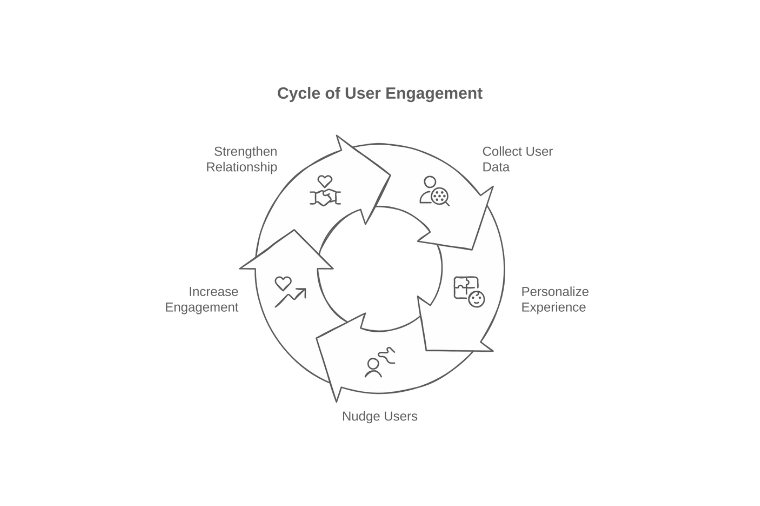
For instance, say a user keeps browsing through design templates in a creative tool but never uses the collaboration feature. Getting a nudge about how to share designs with a team can be both surprising and useful, at the right time. It’s not random. It’s based on real behavior. Product usage nudges of these kinds keep the users engaged for a longer duration and the chances of their return are also higher.
This is such a subtle shift, but so powerful. It changes from one-size-fits-all interactions to inherently dynamic content that changes as the user’s exploration progresses. Instead of overflowing with every single possible feature and praying that something sticks, rather it just provides the ones that fit into the user’s journey. This is not a coincidence; more often than not, this focused attention leads to considerably more engaging results. With a high engagement rate, that likely means people are getting some value out of the platform rather than strictly going there out of habit.
This idea has strong numbers behind it. By introducing an interactive strategy quiz, AdRoll saw feature usage increase by 35 percent. The quiz was able to help guide users towards specific features depending on what they selected, making the experience feel like it was custom built for them from the start. Another well known platform, Canva, gives a special congratulations to users after they have reached a designated number of designs. This is a type of real time recognition that builds on the progress and strengthens the relationship between the user and the product.
At this stage, it’s not about complexity in personalization. It’s about care. It displays the product paying attention and wanting to help. Users tend to stay longer, use more and explore deeper when they don’t feel overwhelmed, but rather guided. All these result in stronger metrics in terms, be it average session duration, to daily as well as monthly active users.
4. Enhancing Satisfaction and Retention
Personalization starts to have a greater relevance as users move beyond initial engagement. It transforms from action driving to connection making. Loyalty starts to build up when users feel appreciated and seen over time. Personalized interactions that acknowledged progress or offered related features made the experience feel more human. For instance, a simple milestone celebration of Canva and customized cross-sell invitations on YouTube are straightforward but powerful examples of this technique. Emotional AI personalization goes further in recognizing feelings in users and creating messages that adapt to those. It aligns with the broader digital marketing strategies, focused on building meaningful, emotion-driven relationships where products respond not just to behavior but also to emotion.
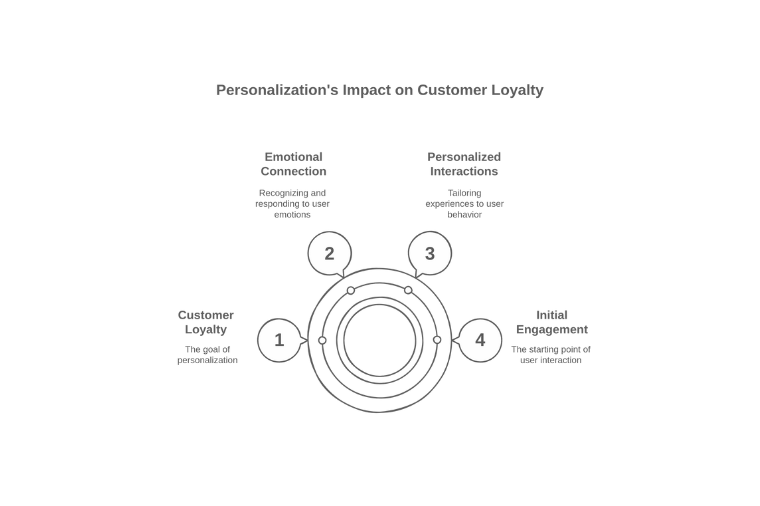
Clearly, these efforts have made an impact; higher Net Promoter Scores and lower churn indicate greater retention, which is evidence that personalization increases satisfaction and even trust. Gradually, this results in higher Customer Lifetime Value, with loyal customers joining and staying longer. Brands such as Netflix, Amazon, and Spotify excel at delivering relevant recommendations based on extensive user data and preferences. Such ongoing personal touches encourage one-time users to develop into long-term advocates.
The great insight this brings is that personalization is more than the first touch point; everything after counts. It turns the user journey into an ongoing, human-centered relationship that garners trust.
5. Overcoming Implementation Challenges
It’s important to note that when you build on the deep connections that personalization creates, successfully delivering those experiences demands more than good intentions. Data is the foundation of good personalization. Brands can’t create experiences that actually resonate without having accurate, timely information about users.
But today, AI and machine learning have now transformed how we use data. These technologies allow marketers to unveil valuable insight in seemingly never ending customer databases and automate personalization that previously required a large marginal amount of work from marketers. This allows for hyper personalization using real time data that provides highly relevant experiences.
Personalization must also work beautifully across all channels, simultaneously. Omnichannel approaches ensure that no matter how customers choose to interact – online, in store or with their mobile device – the experience feels connected and consistent. As privacy becomes a larger issue, first party and behavioral signal based cookieless personalization techniques are becoming more important.
There are also challenges when implementing personalization. A lot of organizations struggle with integrating tools, aligning the teams and compliance with privacy regulations. Those hurdles are the reason that companies lean on powerful platforms such as Customer Data Platform and Web Personalization tools. A good Customer Data Platform unifies data from multiple sources to create a single source of truth that makes personalization more precise. Web Personalization tools enable testing and optimizing various experiences to direct how visitors engage with the site and make sure that tailored content drives real results.
Leading brands like Amazon and Spotify showcase the power of these approaches. Their machine learning-driven recommendation engines are examples of personalization at scale, delivering content and product suggestions that feel intuitively right for each user.
Conclusion
Today, personalization is not simply an option but rather a requirement for how businesses interact with customers, beginning with the first interaction all the way to onboarding, engagement and long term retention. Delivering experiences personalized to individual needs, it turns visitors into loyal users and boosts revenue. An effective personalization path involves a strategic, data driven approach. Those companies that are willing to operate with this mindset unlock powerful opportunities as to how they can connect much deeper with their audience.
Author’s Bio:
Vidhatanand is the Founder and CEO of Fragmatic, a web personalization platform for B2B businesses. He specializes in advancing AI-driven personalization and is passionate about creating technologies that help businesses deliver meaningful digital experiences.